Frédéric Bazille, a name perhaps less universally recognized than his contemporaries Claude Monet or Pierre-Auguste Renoir, stands as a crucial and tragically short-lived figure in the narrative of 19th-century French art. His contributions, both as an innovative painter and a supportive friend to fellow artists, were instrumental in the formative years of Impressionism. Born into affluence yet driven by an undeniable artistic passion, Bazille's life and career offer a compelling glimpse into a revolutionary period in art history, cut short by his untimely death on the battlefield. This exploration delves into the life, artistic evolution, key works, relationships, and enduring legacy of Jean Frédéric Bazille, an artist whose vision helped shape one of art's most beloved movements.
Early Life and Artistic Awakening in Montpellier
Jean Frédéric Bazille was born on December 6, 1841, in Montpellier, a sun-drenched city in the Hérault department of Southern France. His family was prominent and wealthy, belonging to the Protestant haute bourgeoisie. His father, Gaston Bazille, was an agronomist and a senator, and his mother, Camille Vialars, also came from a prosperous background. This comfortable upbringing provided Frédéric with financial security throughout his life, a stark contrast to many of his artist friends who struggled with poverty.
From a young age, Bazille displayed a keen interest in the arts, particularly painting. His early artistic inclinations were reportedly encouraged by his family, who were patrons of the arts. He was particularly drawn to the works of Romantic painters like Eugène Delacroix, whose dramatic use of color and expressive brushwork left an early impression on the young Bazille. He also admired the Realism of Gustave Courbet, whose commitment to depicting contemporary life resonated with Bazille's own developing artistic sensibilities.
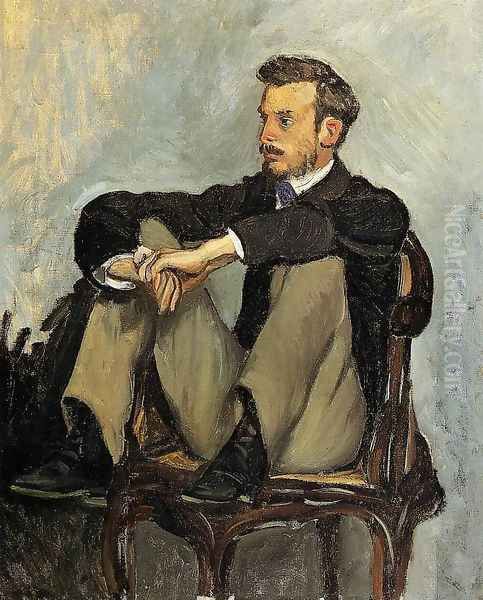
Despite his burgeoning passion for art, Bazille's family, in a manner typical of the era for sons of their social standing, encouraged him to pursue a more conventional and stable profession. Consequently, in 1859, he began to study medicine in Montpellier. This path was not entirely divorced from his artistic interests, as the study of anatomy could be beneficial for figure painting. However, his dedication to art remained unwavering, and he simultaneously took drawing and painting lessons at the Musée Fabre in Montpellier, under the tutelage of local artists, including the sculptor Baussan, who advised him to study the old masters.
The Parisian Crucible: Medical Studies and Artistic Immersion
In 1862, at the age of 21, Frédéric Bazille made the pivotal move to Paris, ostensibly to continue his medical studies. Paris, however, was the undisputed epicenter of the art world, a vibrant hub of academic tradition and burgeoning avant-garde movements. It was here that Bazille's artistic destiny would truly begin to unfold. While he dutifully attended his medical lectures, his heart and mind were increasingly captivated by the artistic ferment of the capital.
Shortly after arriving in Paris, Bazille sought out formal art instruction. He enrolled in the studio of Charles Gleyre, a Swiss academic painter who had taken over the studio of Paul Delaroche. Gleyre's atelier was a popular choice for aspiring artists, known for its relatively liberal teaching methods compared to the more rigid École des Beaux-Arts. It was within the walls of Gleyre's studio that Bazille's life would take a decisive turn. Here, he formed friendships that would not only shape his artistic development but also become central to the nascent Impressionist group.
His fellow students included Claude Monet, Pierre-Auguste Renoir, and Alfred Sisley. These young men, all possessing a restless desire to break free from academic constraints and explore new modes of artistic expression, quickly bonded. They shared a common dissatisfaction with Gleyre's traditional approach, which emphasized mythological and historical subjects and a polished, idealized finish. Instead, they were drawn to the idea of painting modern life and capturing the fleeting effects of light and atmosphere, particularly outdoors. This shared vision formed the bedrock of their lifelong friendships and artistic collaborations.
Forging Impressionism: Friendships and Shared Studios
The camaraderie forged in Gleyre's studio extended beyond the classroom. Bazille, Monet, Renoir, and Sisley often painted together, embarking on excursions to the Forest of Fontainebleau, a favored haunt of the Barbizon School painters like Jean-Baptiste-Camille Corot and Charles-François Daubigny, whom they admired for their commitment to landscape painting from nature. These plein air (outdoor) painting sessions were crucial for their development, allowing them to experiment with capturing the immediate sensory experience of a landscape.
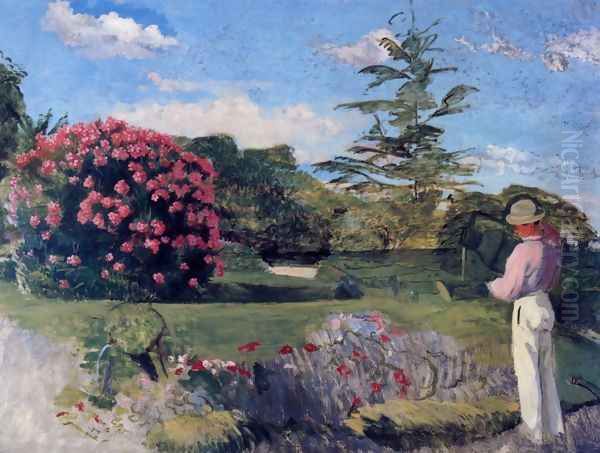
Bazille's financial means played a significant role in supporting this burgeoning group. He was known for his generosity, often sharing his studio space with his less affluent friends, particularly Monet and Renoir, who frequently faced financial hardship. His studios became lively meeting places where ideas were exchanged, artistic theories debated, and a collective spirit of rebellion against the art establishment was nurtured. One of his early shared studios was on Rue de Furstenberg, a space previously occupied by Delacroix, which Bazille took over in 1862.
In 1864, Gleyre closed his studio due to illness, an event that further solidified the independence of Bazille and his circle. They were now free to pursue their artistic vision without the constraints of formal academic training. Bazille continued to support his friends; he famously bought Monet's "Women in the Garden" (1866-67) for 2,500 francs, paid in installments, to help Monet out of a difficult financial situation, even though the painting had been rejected by the Salon. This act underscores Bazille's loyalty and his belief in his friends' talent.
Artistic Style: Realism, Light, and the Figure in Landscape
Frédéric Bazille's artistic style is often characterized as a bridge between Realism and Impressionism. He admired the work of Realists like Gustave Courbet and Édouard Manet, particularly their focus on contemporary subjects and their bold, often unidealized, portrayal of figures. Manet, in particular, became a significant influence and a friend. Bazille's work often features carefully constructed compositions and a solid rendering of form, which reflects his academic training and his affinity for Realist principles.
However, Bazille was equally fascinated by the play of light and color, especially in outdoor settings. This is where his connection to the emerging Impressionist sensibility becomes most apparent. He was one of the pioneers of painting figures en plein air, striving to integrate them harmoniously within a sunlit landscape. Unlike some of his Impressionist colleagues who would later dissolve form in favor of capturing atmospheric effects, Bazille often maintained a strong sense of structure and clarity in his figures, even when they were bathed in natural light.
His palette was generally brighter and more vibrant than that of traditional academic painters, and he experimented with capturing the nuances of sunlight and shadow. He was particularly skilled at depicting the clear, strong light of his native Southern France, which features prominently in several of his most important works. His paintings often convey a sense of calm, order, and quiet intimacy, reflecting his own reserved and thoughtful personality.
Key Masterworks and Their Significance
Despite his tragically short career, spanning less than a decade, Bazille produced a body of work that includes several masterpieces, showcasing his unique artistic vision.
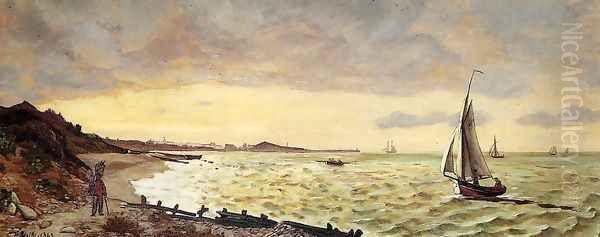
The Pink Dress (La Robe Rose), painted around 1864, is one of his earliest significant works. It depicts his cousin, Thérèse des Hours, seated on a stone parapet, her back to the viewer, gazing out over the family estate at Méric, near Montpellier. The contrast between the brightly lit village in the distance and the shaded figure in the foreground, along with the delicate rendering of the pink and grey striped dress, demonstrates Bazille's early mastery of light and color. The painting was accepted by the Paris Salon in 1865.
Family Reunion (Réunion de Famille), completed in 1867 and exhibited at the Salon of 1868, is perhaps his most ambitious and well-known painting. This large canvas portrays ten members of Bazille's extended family gathered on the terrace of their estate at Méric. Each figure is a distinct portrait, rendered with care and psychological insight. The scene is bathed in the soft, dappled sunlight filtering through the trees, a hallmark of Bazille's interest in plein air effects. The artist himself is included in the group, standing at the far left, a thoughtful observer. The painting's blend of formal portraiture with a relaxed, almost snapshot-like quality was innovative for its time.
Bazille's Studio, 9 Rue de la Condamine (L'Atelier de Bazille), painted in 1870, is another iconic work. It offers a fascinating glimpse into the artist's world and his circle of friends. The painting depicts Bazille himself, tall and prominent, showing a canvas to Édouard Manet, who stands critically assessing it. Pierre-Auguste Renoir is seated on a table, conversing with the writer Émile Zola, a staunch defender of the new art. Claude Monet is also present, though less clearly identifiable, possibly standing by the easel. The studio is filled with paintings, including some that were rejected by the Salon, such as Bazille's own "The Toilette" and Renoir's "Bather with a Griffon Dog." The work is a testament to the camaraderie and shared artistic struggles of the group. Interestingly, it is believed that Manet painted the figure of Bazille into the composition.
Summer Scene (Bathers) (Scène d'été), completed in 1869 and exhibited at the Salon of 1870, showcases Bazille's skill in depicting male nudes in a natural, sunlit landscape. The painting features young men in various states of repose and activity by a riverbank, likely inspired by the Lez river near Montpellier. The figures are rendered with anatomical precision, yet integrated into a vibrant, light-filled setting. The work reflects Bazille's interest in classical themes (bathers) reinterpreted in a modern, naturalistic style. It also subtly hints at a homoerotic sensibility, a subject of some art historical discussion regarding Bazille's personal life.
View of the Village (Vue de Village), painted in 1868, again features his cousin Thérèse des Hours, this time seated under a tree in the foreground, with the village of Castelnau-le-Lez stretching out in the sun-drenched distance. The painting is notable for its bold use of color, its strong contrasts of light and shadow, and its innovative composition, which emphasizes the depth of the landscape. It was accepted at the Salon of 1869.
Ruth and Boaz (Ruth et Booz), painted in 1870, is a rare foray into a biblical subject for Bazille, inspired by a poem by Victor Hugo. This work, with its more traditional theme, might have been an attempt to gain greater acceptance at the Salon. However, it still displays his characteristic attention to light and naturalistic detail.
Another work that reveals his experimental nature is Young Woman with Peonies (Jeune femme aux pivoines) (1870), a vibrant still life combined with a figure, possibly a servant arranging flowers. The lushness of the flowers and the rich colors anticipate the floral still lifes that would become a staple for many Impressionists.
The Generous Spirit: Patronage and Support
Bazille's affluence set him apart from many of his artist friends, and he used his means generously. He frequently shared his lodgings and studios, providing a haven for Monet and Renoir during their periods of acute financial distress. His studio at 9 Rue de la Condamine, which he occupied from 1868 to 1870, was a particularly important hub for the group. It was large enough to accommodate several artists working simultaneously and became a de facto headquarters for the "Batignolles group," as they were sometimes called, after the Café Guerbois in the Batignolles district where they often met with Manet, Edgar Degas, Camille Pissarro, Paul Cézanne, and writers like Zola.
Beyond sharing space, Bazille also provided direct financial assistance. As mentioned, he purchased Monet's "Women in the Garden" when Monet desperately needed funds. He also commissioned portraits from his friends, such as Renoir's portrait of him from 1867. This financial and moral support was invaluable to artists who were struggling for recognition and often facing rejection from the official Salon. Bazille's belief in their talent and his willingness to invest in their work helped sustain them during difficult times. His letters often express concern for his friends' well-being and frustration with the art establishment's conservatism.
The Shadow of War and an Untimely Demise
The promising trajectory of Bazille's life and career was tragically cut short by the outbreak of the Franco-Prussian War in July 1870. Despite his privileged background, which might have allowed him to avoid service, Bazille felt a patriotic duty to enlist. In August 1870, he joined a Zouave regiment, a light infantry unit known for its distinctive North African-inspired uniforms.
His letters from this period reveal a mix of apprehension and resolve. He wrote to his parents about the grim realities of military life but remained committed to his decision. The war quickly turned disastrous for France. On November 28, 1870, during the Battle of Beaune-la-Rolande, Bazille's unit was engaged in fierce fighting. According to accounts, his commanding officer was wounded, and Bazille took command, leading an assault on a Prussian position. He was struck twice by enemy fire and killed in action. He was just shy of his 29th birthday.
The news of his death devastated his family and friends. His father, Gaston Bazille, traveled to the battlefield in the dead of winter, enduring a harrowing ten-day search in the snow-covered terrain to recover his son's body. Frédéric Bazille was eventually brought back to Montpellier and buried in the Protestant cemetery there. His death was a profound loss for the emerging Impressionist movement, robbing it of one of its most talented and supportive figures just as it was on the cusp of formally announcing itself to the world with the first Impressionist exhibition in 1874 – an event Bazille would never witness.
Unraveling Mysteries: Anecdotes and Unresolved Questions
Bazille's life, though brief, is not without its intriguing aspects and unanswered questions. One fascinating discovery relates to his painting Young Woman at the Piano (Jeune femme au piano) (1865-66). X-ray analysis of this work revealed an earlier, entirely different composition underneath: a portrait of a young man, possibly Bazille himself or a friend. This practice of painting over earlier works was common among artists, often due to economic reasons (reusing canvases) or artistic dissatisfaction, and it offers a glimpse into Bazille's working methods and evolving ideas.
His personal life remains somewhat enigmatic. Bazille never married and had no known female romantic attachments, which has led to speculation among some art historians about his sexuality. His sensitive depictions of male nudes, such as in "Summer Scene (Bathers)," and his close, intense friendships with male artists have been cited in discussions of potential homoerotic undercurrents in his life and work. However, concrete evidence is lacking, and such interpretations remain speculative.
The circumstances of his death, while generally accepted as occurring at Beaune-la-Rolande, have minor discrepancies in some accounts regarding the exact date or specific details of the engagement. Some sources initially cited November 23rd, but the 28th is more widely confirmed. There were also differing narratives about why he joined the army, with some early, less substantiated claims suggesting disillusionment with his art or health issues, though patriotic duty is the most supported reason.
The rediscovery and full appreciation of Bazille's work were gradual. Overshadowed for a time by his more famous contemporaries who lived to see Impressionism flourish, his contributions began to gain more significant recognition in the 20th century, particularly from the 1930s onwards, with dedicated exhibitions and scholarly research. The authenticity of a few minor works attributed to him, like "Child and Bird in a Garden," has occasionally been debated, a common issue for artists whose oeuvres are not exhaustively documented.
Legacy and Posthumous Recognition
Frédéric Bazille's death at such a young age meant he did not participate in the landmark Impressionist exhibitions that began in 1874. Consequently, his name was, for a long time, less prominent than those of Monet, Renoir, Degas, Pissarro, Sisley, or Berthe Morisot. However, his influence on the development of Impressionism is undeniable. He was a pioneer in the depiction of figures in outdoor light, a key concern for the Impressionists. His willingness to tackle large-scale figure compositions, often with a modern sensibility, also set him apart.
His paintings, though relatively few in number (around sixty are known), demonstrate a remarkable talent and a clear artistic vision. They combine a respect for traditional draftsmanship and composition with a fresh, modern approach to color and light. Had he lived, it is fascinating to speculate on how his art might have evolved and how he might have continued to shape the Impressionist movement. Artists like Henri Fantin-Latour, who painted Bazille in his group portrait "A Studio at Les Batignolles" (1870), recognized his importance within their circle.
Today, Bazille's works are held in major museums around the world, including the Musée d'Orsay in Paris, the National Gallery of Art in Washington, D.C., and the Art Institute of Chicago. The Musée Fabre in his hometown of Montpellier also has a significant collection. Retrospectives of his work have helped to solidify his reputation as a key figure of early Impressionism. He is remembered not only for his artistic talent but also for his generosity, his intellectual curiosity, and his unwavering support for his friends. His influence can be seen as part of the lineage that led from Realism through Impressionism, impacting later artists who continued to explore color and light, such as the Post-Impressionists like Georges Seurat or Paul Signac, and even figures like Henri Matisse, who also hailed from a southern French tradition of vibrant color.
Bazille in the Pantheon of Impressionism
Frédéric Bazille's place in the pantheon of Impressionism is that of a foundational figure, a catalyst, and a brilliant talent whose potential was tragically unfulfilled. He was present at the creation, a vital member of the core group that challenged academic conventions and forged a new way of seeing and painting. His explorations of light, his commitment to depicting contemporary life, and his innovative integration of figures into landscapes were all crucial contributions to the emerging Impressionist aesthetic.
While he did not live to see the full flowering of the movement he helped to nurture, his legacy endures through his luminous paintings and the accounts of his supportive role in the lives of his fellow artists. He stands as a poignant reminder of the human cost of war and the fragility of artistic genius. Jean Frédéric Bazille was more than just a precursor; he was an Impressionist in spirit and practice, a visionary whose clear, sunlit canvases continue to captivate and inspire. His art provides an invaluable window into a moment of profound artistic transformation, and his story is an essential chapter in the history of modern art.