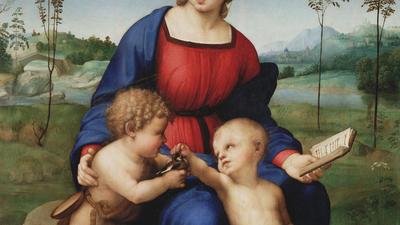
In the quiet shadows of 1506, Raphael painted a masterpiece of divine simplicity known as the Madonna del Granduca. This intimate portrayal of the Virgin Mary and the Christ Child remains one of the most beloved images of the High Renaissance. Gaze at the standing figure of Mary. She holds the infant Jesus with a natural, maternal grace, her body swaying slightly to balance his weight. Her eyes are cast downward in a gesture of humble reflection, while the child looks directly out at us with wide, innocent eyes. There is a profound stillness in their connection, a silent dialogue conveyed through the gentle touch of hands and the softness of their embrace. Technically, the painting is a marvel of light and shadow. Raphael uses a delicate sfumato to blur the edges of their figures, allowing them to emerge seamlessly from a deep, dark void. This velvety black background pushes the subjects forward, bathed in a soft, golden glow that warms their skin and illuminates the rich crimsons and deep blues of Mary’s robes. The transition from light to shadow is fluid and rhythmic, creating a sense of three-dimensional volume that feels almost touchable.
What makes this work extraordinary is its humanity. Raphael strips away ornate thrones and busy landscapes, focusing purely on the emotional purity of motherhood. It is a vision of calm and eternal grace, captured in a moment of perfect balance. Through this harmony of form and feeling, Raphael transforms a simple pose into a timeless icon of peace.