In 1605, near the end of his turbulent life, Michelangelo Merisi da Caravaggio painted this haunting masterpiece: David with the Head of Goliath. It is a scene stripped of celebration, focusing instead on a quiet, lingering moment of aftermath. Emerging from a void of deep, velvety darkness, a young David holds the severed head of his enemy. His posture is not one of triumph, but of weary contemplation. With one arm extended, he grips the hair of the giant, whose mouth remains frozen in a silent, hollow gasp. Look closely at David’s face; there is a soft, mournful gaze in his eyes, a gentle sadness that blurs the line between victor and victim.
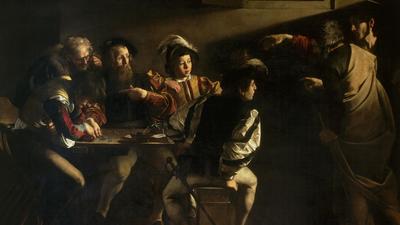
Caravaggio’s mastery of light—his signature chiaroscuro—is on full display here. A single, dramatic source of light cuts through the gloom, illuminating the pale skin of the youth and the rugged, earthy textures of Goliath’s features. The palette is muted, dominated by warm shadows and the dull gleam of a steel blade. This stark contrast creates a heavy, atmospheric weight, making the figures feel startlingly three-dimensional, as if they are stepping out of the canvas into our space. This work is profoundly personal, as the bruised and battered face of Goliath is widely considered to be a self-portrait of the artist himself. It is an act of raw vulnerability, blending the macabre with a deep sense of psychological exhaustion. It remains a powerful meditation on justice, mercy, and the heavy price of violence.